13–14 November, Liverpool – The Bluecoat
In the spirit of innovation and using technology creatively, I present this as a playful newsletter created in collaboration with AI. It is an edited version of what happened when I uploaded my handwritten scribbles into ChatGPT and asked it to create a friendly report from these.
Here’s a friendly round-up of what we explored during the CSC Leaders Liverpool Pop-Up — a lively two days filled with big ideas, local voices, and inspiring examples of how the arts shape cities, communities, and livelihoods. And yes… we kept circling back to one question: Do the arts really have value? Spoiler: absolutely.
1. Liverpool’s Creative Engine: Insights from Liam Kelly (Make Liverpool.)
Liam Kelly kicked us off with a brilliant look at how creative spaces can transform a city and drive regeneration.
He is founder and co-director of Make Liverpool. — a network of places where artists and makers can work, collaborate and build community. What started as a few studios has grown into a strategic role of buying and refurbishing buildings and turning them into creative workshops across Merseyside (St Helens, Birkenhead, Huyton… the list keeps growing!).
A few memorable takeaways:
– Creative spaces aren’t just about studio square footage; they spark local growth and regeneration.
– Technology helps keep staffing light — meaning more resources go directly to artists.
– “Meanwhile use” (temporary use of empty buildings) gives artists a foothold without the pressure of commercial rents.
– And crucially, the buildings team supports them so artists don’t have to worry about property management — they can just focus on making.
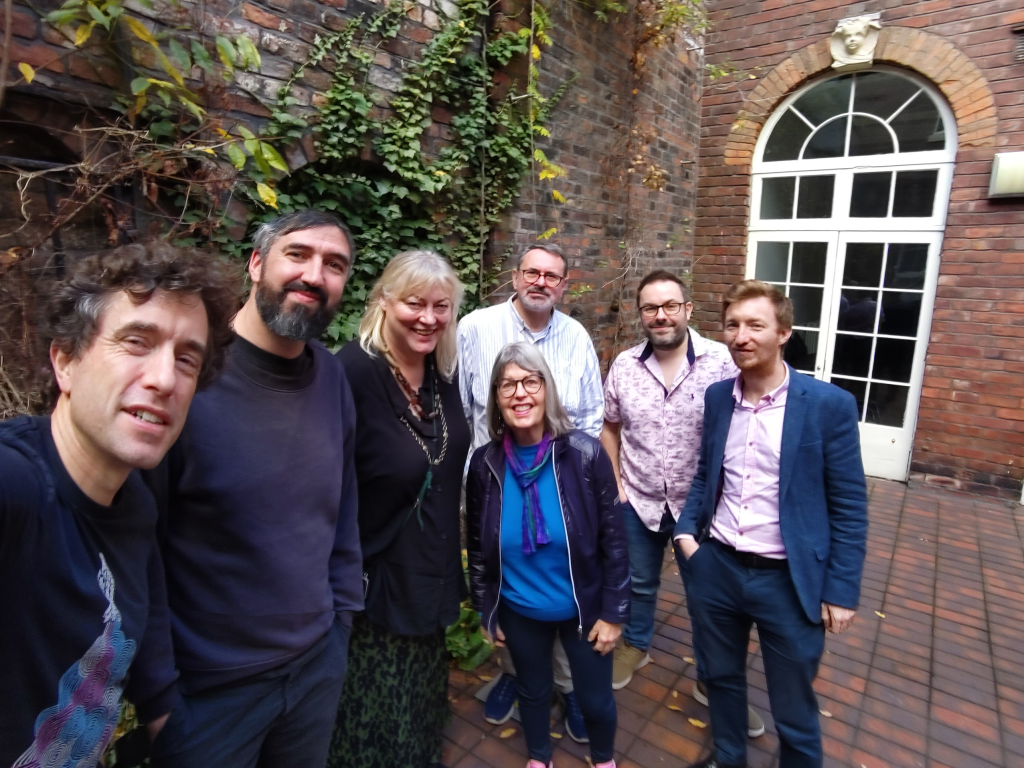
2. Culture as a Brand: Paul Grover, Liverpool BID (Business Investment District) Company
Next up, Paul Grover gave us a whistlestop tour of how Liverpool is using arts and culture to rebrand an entire city centre.
Their approach is simple but clever: link existing buildings and fill the “gaps in between” with experiences, pop-ups, installations, and cultural activity. It turns a walk through the city into something memorable.
Highlights:
- Liverpool has made a huge investment in physical infrastructure, and culture is the glue helping it all make sense.
- The Bluecoat is at the centre of it all – the building and the role it plays
- They’re also thinking about residents, not just tourists — encouraging people to come back into the city centre and engage with the arts on offer.
- It’s not enough to create a space — you need a programme, something sustainable and alive.
- There’s even an app to help bring these areas to life, such as the Chinese Arch. Culture meets tech.
It’s essentially placemaking, but with Liverpool flair.
PS Paul himself is a CSC Alumnus!
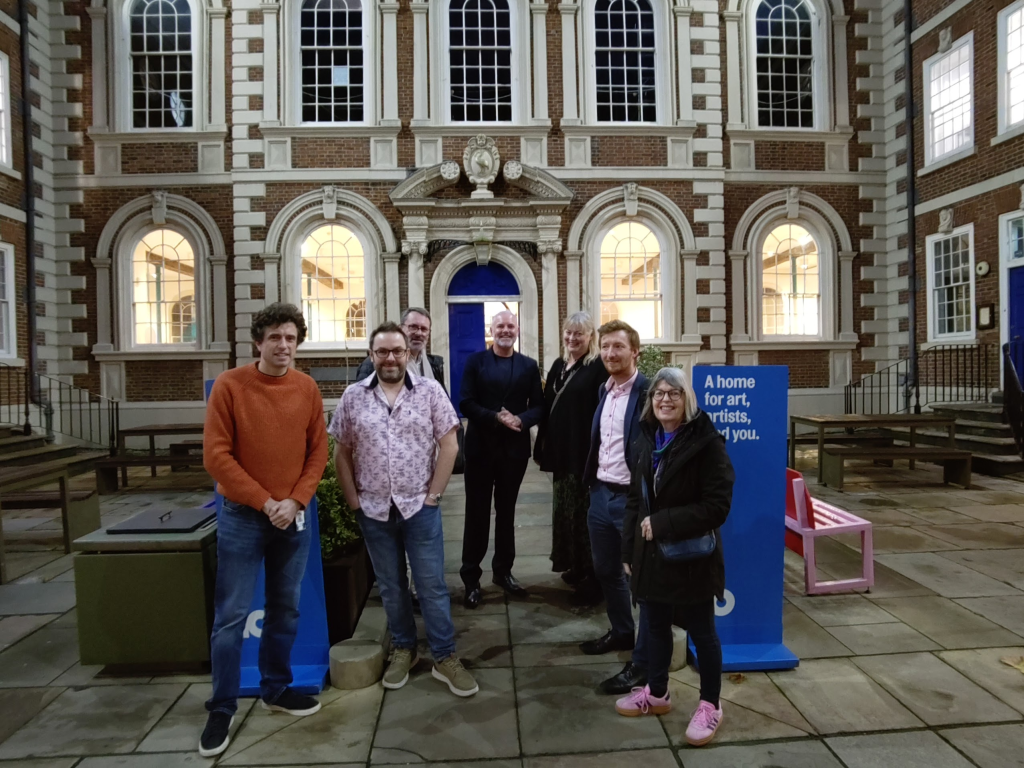
3. A Pause for Poetry: Politics and the Poet – Seamus Heaney Lecture 2025 with Sir Simon Schama and Leanne Best
Actor Leanne Best gave a powerful reading of 3 Seamus Heaney poems followed by a lecture by Sir Simon Schama on how poets have addressed conflict in their times. This ranged from Shakespeare, Milton, Worsdworth, Coleridge, Emerson and ending with Whitman and the Gettysburg Address. A thread running through centuries of artists who help shape our inner world.
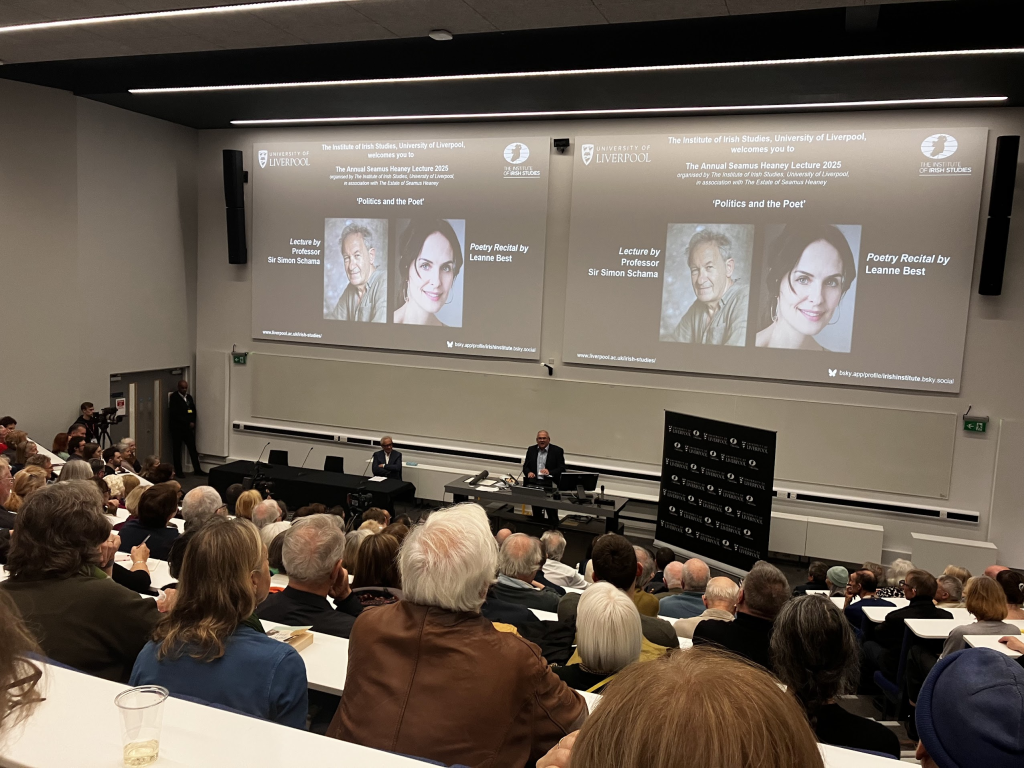
Italian Meal at The Buyers Club
Fresh from poetry and thoughtful discussion, we wandered over to The Buyers Club, where we rounded off the evening with a relaxed Italian meal.
It was one of those perfect post-lecture moments: good food, warm conversation, and that gentle feeling that the day had been both stimulating and nourishing.
4. The Bluecoat Story: Bryan Biggs – Director of Heritage
We then learned more about our base for the event – Liverpool city centre’s oldest building and the UK’s first Arts Centre — the Bluecoat (built in 1717) and the UK’s first arts centre.
Bryan Biggs shared its layered history:
- Its origins are tied to slavery through Bryan Blundell and his shipping wealth.
- It was also founded by the Church of England as a school for destitute children of the city.
- The school moved to Wavertree, and since 1907 has been the home to and artisitic community. Bluecoat Society of Arts was constituted in 1927 and it has evolved into a home for avant-garde, progressive and radical art.
- For example, since the 1980s, it has hosted exhibitions exploring Black identity and supporting Black artists.
- Today it’s a hub that blends location, history, and community in a way few places can.
A fascinating combination of heritage and contemporary creativity.
5. The Bigger Picture: What the Arts Do for Places
Threaded through every conversation were a few shared themes:
✔ The arts drive regeneration
Not as a soft “nice-to-have”, but as genuine economic and social infrastructure.
✔ Artists need stability
“Meanwhile spaces”, supportive property teams, and light-touch management all help.
✔ Culture can reshape identity
Cities like Liverpool use the arts to reimagine who they are — and who they want to be.
✔ History matters
Understanding the past (even the uncomfortable parts) strengthens the cultural future.
✔ Creativity builds community
Culture invites people in.
Final Thoughts
Our two days in Liverpool showed, again and again, that the arts are not ornamental — they are essential. They help cities grow, help communities connect, and help individuals make sense of the world.
If anything, we left with an even bigger question:
How can we give the arts the space, support and visibility they truly deserve?
With enormous thanks to Mary Cloake who was the most splendid and generous host as well as organising this stimulating programme, and to the other alumni who took part: Ian Govendir, Ed Greig, Ashley Barratt, Tim Ingram, Richard Rayson
Caroline Marsh
November 2025